GoDaddy launches Node.js hosting; Forminator vulnerability affects 600K+ WordPress sites
My Take
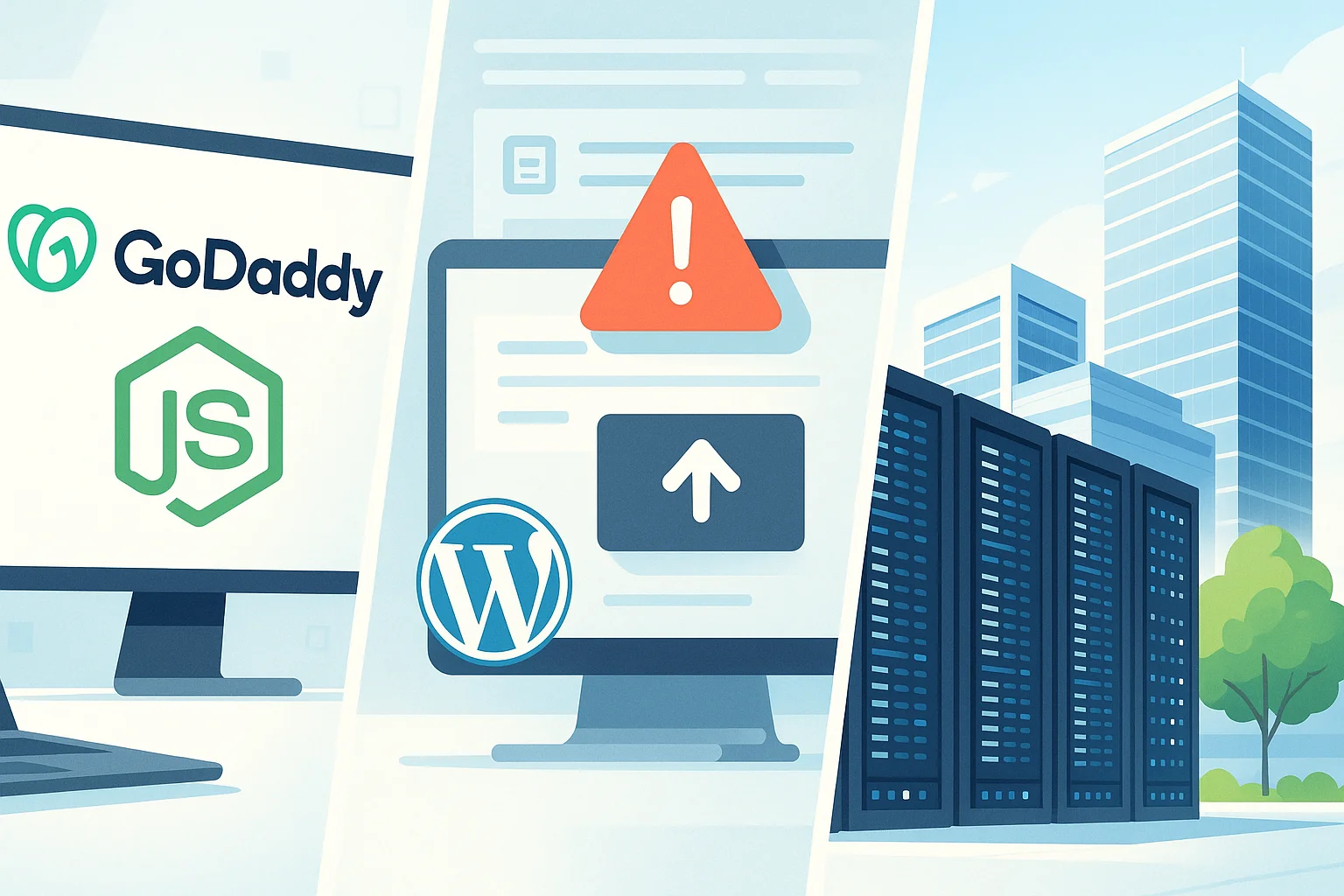
What happened GoDaddy launched managed Node.js hosting today, and a critical vulnerability in Forminator (600K+ active installations) allows unauthenticated file uploads.
Why it matters to hosts If you're competing with GoDaddy on app hosting or running WordPress sites for clients, both developments directly affect your customer conversation and security posture right now.
What to do Audit which of your WordPress installations use Forminator and patch immediately; review your Node.js hosting offering or identify where you're losing customers to GoDaddy's entry.
My view The Forminator issue is the more urgent threat—it's a straightforward RCE that hits a huge installed base. GoDaddy's Node.js play is well-timed but not surprising; they're filling a gap where smaller hosts have already been winning. The real question for independents isn't whether to match them, but whether your differentiation is strong enough that price and free-tier bait don't matter.
Are you seeing managed Node.js hosting requests from your customers, and if so, how are you handling them today—building it yourself, partnering, or declining?
Key Themes
Notable Players
Launched managed Node.js hosting with free tier; also scaled support operations using AI to handle 500+ production apps with five engineers.
Eliminated standalone VMware licensing on Azure, forcing bundled VCF purchases—limiting options for enterprises and small platforms.
Introduced task-based OAuth consent with optional scopes, giving users finer-grained control over app permissions.
Released cache-aware Inference Router to help customers control AI spend as token usage grows.
Applied for 40 new top-level domains through Starlight Registry, moving upstream from reseller model; 15 TLDs overlap with rival portfolios.
Top Stories
GoDaddy launched managed Node.js hosting with free tier, direct competition to platforms like Heroku. For independent hosts, this signals accelerating consolidation—you're now competing with a $10B+ company on app deployment.
Critical vulnerability in Forminator Forms allows unauthenticated PHP file upload; 600K+ active installations affected. Patch urgently if you host WordPress sites or resell through platforms bundling this plugin.
Northern Virginia alone holds 12% of global capacity, though new builds are shifting inland. Datacenter consolidation among hyperscalers is intensifying; independent colocation faces margin pressure.
Loudoun County implemented zoning changes requiring datacenters to undergo approval processes instead of being treated as office parks. Regulatory headwinds are slowing Tier 1 expansion; independents in secondary markets may see relief from competitive pressure.
Namecheap applied for 40 new TLDs through Starlight Registry, moving upstream from reseller model to registry operator. Domain registrars are consolidating; niche registries face new competition from established players.
Security & Compliance
Cloudflare added optional scopes to OAuth, reducing friction for app integrations while improving user privacy. Implement task-based permissions in your own APIs to match evolving user expectations.
Security automation firm Pentera conducting layoffs. Keep an eye on consolidation in the pentest/security tooling space; it may affect integrations you rely on.
Former Samsung engineers stole DRAM process recipes to CXMT, resulting in imprisonment. IP theft in memory manufacturing underscores supply chain risk for datacenters reliant on DRAM sourcing.
Cloud & Infrastructure
DigitalOcean introduced cache-aware routing to reduce AI inference costs as token usage scales. Hosting customers running AI workloads are under cost pressure; routing intelligence is becoming a competitive feature.
Broadcom's VCF-or-nothing licensing model is coming to Azure, eliminating standalone VMware purchasing options. Independent cloud providers and VPS resellers lose leverage; pricing pressure increases.
Enterprises are adopting hybrid AI infrastructure instead of cloud-only, balancing cost and control. This shift creates opportunities for independent datacenters and hybrid offerings if positioned correctly.
Pricing & Business
Google conducting layoffs in 2026. Major cloud providers making workforce adjustments; watch for service quality impacts and competitive pricing moves.
Chinese foundry SMIC posted record revenue and raised wafer prices amid US sanctions. Semiconductor cost inflation will ripple through server and chip procurement for datacenters.
GoDaddy's platform team automated 80% of support with AI, serving 500+ apps with five engineers. Automation is becoming essential for cost control; consider where AI can reduce your support labor costs.
Control Panels
Plesk positioning its editions for different hosting provider sizes and use cases. Understand your control panel's feature set and licensing to remain competitive against bundled alternatives.
Plesk extension guide for server-side Core Web Vitals optimization with caching and CDN guidance. Performance tuning is becoming table-stakes for shared hosting; documented best practices help you retain customers.
Domains & DNS
Customer dispute over Contabo account suspension and service termination escalated on Reddit. Service provider disputes are public-facing reputation risks; transparent billing and payment grace policies matter.
Community & Events
WordCamp US 2026 drew 1,100+ attendees and thousands of remote viewers; AI was a major theme. WordPress ecosystem is actively adopting AI tools; hosting providers should monitor plugin trends and prepare for new compatibility challenges.
Technology & Tools
Hostsclick enables testing websites on new servers via temporary URL without DNS changes. Testing tools reduce migration friction; consider offering similar functionality to customers.
University reduced email hosting costs from $70K/year (IceWarp) to ~$7K/year (self-hosted Stalwart). Self-hosting is economically viable for large mailbox counts; independents should monitor open-source mail alternatives.
NetBSD 11 added RISC-V support and faster VM boot times. RISC-V adoption is accelerating; consider building test environments to validate compatibility with your infrastructure.
Pine64 suspended SBC and device production through mid-2027 due to memory shortages. Supply constraints are persisting; edge hosting and appliance-based offerings face component availability risks.
SparkyLinux 8.4 restored 32-bit support with minimal x86 images. Legacy system support remains relevant; maintaining compatibility with older architectures keeps hosting accessible.
Synopsys demonstrated 3D PCIe 6.0 test chip at 5nm in face-to-face stacked packaging. Advanced interconnect validation is progressing; next-gen server architecture will benefit from improved I/O throughput.
Data Centers
Cisco and Broadcom released 102.4T Ethernet switches for AI clusters; network silicon is becoming the bottleneck. Datacenters scaling for AI must prioritize high-speed interconnects; networking is no longer secondary.
Micron investing $10B in Boise-based research hub for memory, compute, and packaging for AI systems. Memory innovation is critical to AI viability; suppliers are heavily funded, but availability and cost remain concerns.
Ypsilanti Township blocked electrical substation for University of Michigan hyperscale project; one-year moratorium on new datacenters in place. Local opposition to large projects is hardening; site acquisition and permitting are slowing.
AI & ML
OpenAI introduced Private Safety Processing with zero data retention for enterprise customers competing for Anthropic's business model. Privacy-first AI services are becoming a competitive requirement; evaluate your data handling policies.
HPL rankings are becoming obsolete as AI workloads drive privately-held cluster design; public benchmarks no longer reflect real-world bottlenecks. Datacenter performance tuning is now application-specific; generic benchmarks mislead capacity planning.
AMD reports 4x power efficiency improvement over two years in AI systems. Power density is the new primary constraint for hyperscalers; datacenters must prioritize cooling and electrical budgets over raw capacity.